
Looking for reliable security services? Whether you need protection for your business premises, a special event, or ongoing security coverage, understanding what professional security guards can do for you is the first step toward making the right choice.
Let’s walk through everything you need to know about hiring security guards in the UK, from what they actually do to how much you should expect to pay.
What Do Security Guard Services Actually Include?
Here’s the thing about modern security services – they’re far more sophisticated than just having someone watch your front door. Today’s professional security guards are trained specialists who bring real value to your business.
When you partner with a quality security guard service, you’re getting a complete security solution. This includes thorough risk assessments of your property, professional access control management, constant surveillance monitoring, rapid incident response, and most importantly, proactive threat prevention before problems even arise.
Think of it this way: good security isn’t just about reacting to trouble. It’s about stopping trouble before it starts.
Why UK Security Guards Are Held to Higher Standards
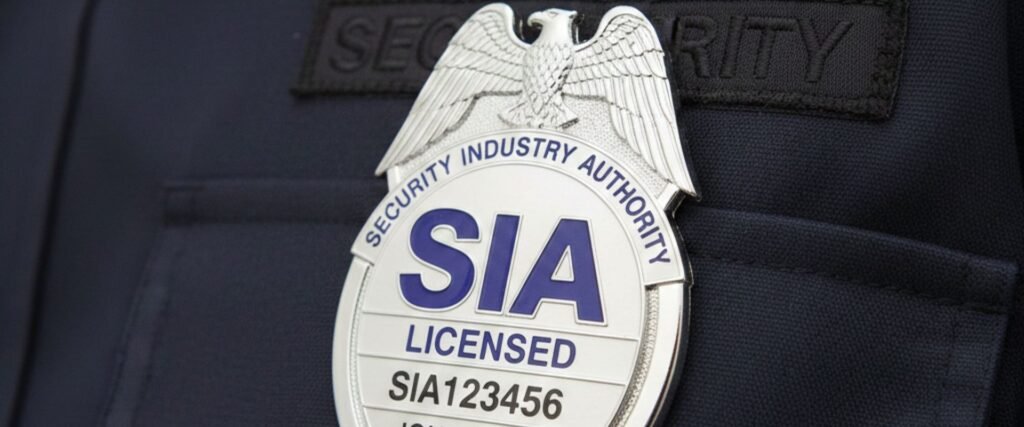
If you’re hiring security guards in the UK, there’s something important you should know. Every single security professional working legally in this country must be licensed by the Security Industry Authority (SIA). There are no exceptions to this rule.
This isn’t just red tape. The SIA licensing system means that every UK security guard has been through rigorous background checks, identity verification, and mandatory training courses before they’re allowed to work. When you see that SIA badge, you know you’re dealing with someone who’s been properly vetted and trained.
For you as a client, this regulatory framework provides genuine peace of mind. You’re not just hiring muscle – you’re bringing in qualified professionals who understand their legal responsibilities and how to handle security situations properly.
The Different Types of Security Services Available
Not all security needs are the same, which is why professional providers offer different service types. Here’s what you’ll typically find:
Static Manned Guarding is probably what comes to mind when you think of security. These are the professionals stationed at your location who monitor everything happening on-site, control who comes and goes, and respond immediately to any incidents. If you need someone on-site 24/7, this is your solution. A skilled London security guard, for instance, provides both a visible deterrent and the ability to react quickly when needed.
Mobile Patrol Services work differently. Instead of having someone stationed permanently at your location, you get regular security patrols at intervals throughout the day or night. This is particularly cost-effective if you have multiple sites or don’t need constant presence but still want professional security coverage.
Event Security requires a different skill set entirely. These security professionals are trained specifically in crowd management, emergency procedures, and keeping large gatherings safe and orderly. Whether you’re hosting a corporate function or a large public event, having experienced event security makes all the difference.
Retail Security focuses on protecting shops and stores. These specialists understand loss prevention, customer safety, and how to maintain a welcoming environment while keeping your business secure.
Corporate Security serves office buildings and business premises. These professionals understand corporate protocols, visitor management systems, and maintaining professional security without disrupting your business operations.
Let’s Talk About Armed Security in the UK
This question comes up a lot, so let’s address it clearly: no, standard security guards in the UK do not carry firearms. The situation with an armed security guard UK scenario is extremely limited and highly regulated.
The UK takes a fundamentally different approach to security compared to some other countries. Only very specific, high-risk government installations – think diplomatic buildings or nuclear facilities – are protected by armed personnel, and even these positions require special Home Office authorization.
Before you worry that this limits effectiveness, understand that UK security guards are highly trained in communication, de-escalation, and conflict resolution. They’re remarkably effective without weapons. In fact, the absence of firearms often means situations can be resolved more safely through professional training and proper technique.
What Can You Expect to Pay? Security Guard Salary UK Insights
Understanding the security guard salary UK market helps you budget properly and ensures you’re working with professionals who are fairly compensated (which usually means better service for you).
Here’s the realistic picture: entry-level security positions typically start around £22,000 to £25,000 per year. As guards gain experience and additional certifications, salaries rise to between £28,000 and £35,000 annually. Specialized roles, supervisors, or those with advanced qualifications can earn £40,000 or more.
If you’re looking specifically at London security guard positions, expect to pay premium rates. London wages are typically 15-25% higher than the national average, reflecting the capital’s higher living costs and stronger demand for security services.
Several factors influence what you’ll pay:
Location matters significantly. Major cities command higher rates than smaller towns. It’s simple economics – higher demand and living costs mean higher wages.
The industry sector makes a difference too. Corporate and financial sector security typically pays more than retail positions, reflecting the increased responsibility and specialized knowledge required.
Shift patterns affect costs. Night shifts, weekends, and bank holidays attract premium rates, sometimes 20-30% above standard day rates. This is standard practice across the security industry.
Experience and qualifications directly impact pricing. Guards with additional certifications in areas like first aid, CCTV operation, or conflict management command higher rates because they bring more value.
Employment type affects your costs. Hiring directly versus through an agency produces different cost structures, though agencies often provide more flexibility and handle administrative tasks for you.
How to Choose the Right Security Service (This Actually Matters)
Right, here’s where many businesses make expensive mistakes. Choosing your security provider based solely on price is a recipe for disappointment. Here’s what actually matters:
Licensing is non-negotiable. Every person the company sends to your site must hold a valid SIA licence. Don’t be shy about asking to see them. If a company hesitates or makes excuses, walk away immediately.
Experience in your specific sector matters more than general experience. A company that’s protected dozens of retail locations understands retail security in ways a company focused on construction sites simply doesn’t. Look for proven experience in your industry.
Training standards separate good companies from great ones. The best service security guard companies don’t just meet minimum SIA requirements – they invest continuously in ongoing professional development for their staff. Ask what additional training their guards receive.
Technology integration is increasingly important. Modern security combines human expertise with CCTV monitoring, access control systems, and incident reporting software. How does the company integrate these tools?
Response capabilities need to be clearly defined. What happens in an emergency? How quickly can they deploy additional resources if needed? What’s their procedure for serious incidents? These aren’t pleasant questions, but they’re essential ones.
Customization shows they understand business. Every security situation is unique. Be wary of companies offering only standard packages. The best providers take time to understand your specific needs and tailor solutions accordingly.
Communication can make or break the relationship. You need clear reporting structures and regular updates about security matters affecting your premises. How does the company handle communication?
The Real Value Professional Security Brings
Let’s move beyond the obvious “they stop bad things happening” and talk about the actual business value of professional security services:
Crime deterrence works. There’s solid evidence that visible security presence significantly reduces theft, vandalism, and unauthorized access. It’s not just about catching criminals – it’s about convincing them to go elsewhere.
Rapid response prevents escalation. When incidents do occur, trained security personnel can address situations immediately. This prevents minor issues from becoming major problems and significantly reduces potential damage.
Customer confidence affects your bottom line. For retail and hospitality businesses especially, customers spend more time and money when they feel safe. Professional security creates that welcoming, secure environment.
Liability protection is genuine. Proper security measures demonstrate due diligence, which can reduce insurance premiums and limit your legal exposure if incidents do occur.
Business continuity protects revenue. Security disruptions are expensive. Professional security helps maintain normal operations and protects your revenue streams.
Staff morale improves when people feel safe. Your employees work more confidently and productively knowing professional security measures are in place. This isn’t a small thing – it affects retention and performance.
Security Across Different UK Regions
While security principles remain consistent nationwide, different areas have different needs. London’s dense urban environment and high property values create unique challenges. The capital’s security requirements often involve sophisticated access control, dealing with high foot traffic, and protecting valuable assets in busy areas.
Other major cities like Manchester, Birmingham, Leeds, and Glasgow each have their own security dynamics influenced by local crime patterns, predominant business sectors, and specific regulatory priorities. A good security provider understands these regional nuances and adjusts their approach accordingly.
What’s Next for Security Guard Services?
The security industry is evolving rapidly, and it’s worth understanding where things are heading. Tomorrow’s security guards will work increasingly alongside sophisticated technology – AI-powered surveillance, biometric access control, integrated threat detection platforms.
But here’s what won’t change: the human element remains irreplaceable. Technology enhances what security professionals can do, but the professional judgment, interpersonal skills, and adaptive thinking that trained personnel provide can’t be fully automated.
The most effective security solutions moving forward will combine cutting-edge technology with experienced, well-trained human operators. Neither replaces the other – they work together to provide better protection than either could achieve alone.
Making Your Decision
Whether you need a single security guard for a small retail operation or comprehensive security services for guard protection across multiple locations, taking time to choose the right provider is worth the effort.
Start by getting clear on what you actually need. What are your specific security concerns? What hours need coverage? What’s your realistic budget? Having these answers before you start shopping makes the process much more productive.
Request detailed proposals from at least three licensed providers. Don’t just compare pricing – look at what’s actually included, the qualifications of personnel they’ll assign, and what additional value they bring beyond basic coverage.
Remember that the cheapest option is rarely the best value. Security is fundamentally an investment in protecting your most valuable assets – your people, your property, and your business reputation. Choosing experienced professional security guards UK businesses actually trust ensures you receive reliable, high-quality protection.
Ask questions. Lots of them. Good security companies welcome detailed questions because they understand the importance of what they do. If a provider seems irritated by your questions or can’t provide clear answers, that tells you something important.
Your Questions Answered: Everything Else You Want to Know
How much are security guards paid in the UK?
Let me give you the full picture on security pay in the UK. If you’re just starting out, you’re looking at roughly £22,000-£25,000 per year, which works out to about £11-£13 per hour. As you gain experience and additional skills, that climbs to £28,000-£35,000 annually.
Specialized roles and supervisory positions can push past £40,000. London and major cities pay more – sometimes significantly more – because living costs are higher and demand for good security professionals is strong. It’s worth noting that night shifts and weekend work typically attract premium rates, which can boost your overall earnings substantially.
How much is a security guard paid per hour in the UK?
Hourly rates give you a clearer picture of what security actually costs. For standard daytime shifts, you’re typically looking at £10.50 to £15.00 per hour. Night shifts bump that up to £12-£18 per hour because of the unsociable hours premium.
Experienced professionals or those with specialized skills (think CCTV monitoring, first aid, conflict management) can command £15-£20+ per hour. In London, add another 15-25% to these figures. When you’re budgeting for security services, remember that these rates reflect trained, licensed professionals – not casual labour.
Are security guards in demand in the UK?
Absolutely, yes. The security industry continues growing, and there’s actually a shortage of qualified SIA-licensed personnel. This is good news if you’re looking for work, less convenient if you’re trying to hire.
Demand is particularly strong in retail (especially with concerns about shoplifting), logistics and warehousing (with the growth of online shopping), construction sites (protecting expensive equipment), corporate offices (particularly in major cities), and events (as the events industry continues recovering and growing).
The shortage means good opportunities exist nationwide, but especially in major metropolitan areas where security needs are highest.
How can I become a security guard in the UK?
Getting started in security is more straightforward than many people think. Here’s exactly what you need to do:
First, you need to be at least 18 years old and have the legal right to work in the UK. Those are the basic requirements. Next, you’ll need to pass identity verification and criminal record checks – this is non-negotiable for SIA licensing.
Then comes training. You’ll need to complete an SIA-approved course, typically the Level 2 Award for Working as a Door Supervisor or Security Guard. These courses usually run 4-6 days and cover everything from legal responsibilities to health and safety, communication skills, and conflict management.
Once you’ve completed training, you apply for your SIA licence online. The licence costs £190 (online application) or £220 (paper application) and lasts three years. Training courses typically cost £150-£300 depending on the provider.
Total startup cost is roughly £400-£550, but once you’re licensed, you can start working immediately. Many people find employment with security companies or agencies while they’re still completing their training.
How much does a SIA licence cost in the UK?
An SIA licence costs £190 if you apply online (£220 for paper applications), and it’s valid for three years. That’s just the licence fee though – it doesn’t include your mandatory training.
Budget for the training course too, which runs £150-£300 depending on where you take it. So realistically, you’re looking at £400-£550 total to get licensed for the first time. After three years, you’ll need to renew at the £190 fee again.
Think of it as an investment in a career rather than just a cost. Once you’re licensed, you’ve got three years to earn that back many times over.
Can security guards carry weapons in the UK?
No, and this is important to understand clearly. Standard security guards in the UK cannot carry firearms or any weapons. This isn’t a training issue or a licensing level – it’s UK law.
The only exceptions are extremely limited circumstances requiring Home Office authorization, like protecting diplomatic premises or nuclear facilities. Even these roles are rare and highly specialized.
UK security relies instead on professional training in communication, de-escalation, and proper use of legal detention powers. This approach actually works remarkably well. Security professionals here are trained to resolve situations safely without weapons, and the system has proven effective.
Can UK security guards use handcuffs?
Yes, but with important limitations. Security guards can use handcuffs when making a lawful citizen’s arrest under the Police and Criminal Evidence Act 1984 (PACE). They have the same arrest powers as any member of the public – which means they can arrest someone for an indictable offense.
The key word is “reasonable.” Handcuffs must only be used when necessary and proportionate to the situation. You can’t just handcuff someone because they’re annoying or uncooperative. Improper use can result in assault charges against the guard.
Most professional security companies provide specific training on restraint techniques and exactly when handcuffs can and cannot be used legally. This protects both the guard and the client from legal issues.
What is a security guard not allowed to do?
This is crucial for anyone hiring security to understand. Security guards have specific limitations on their authority:
They cannot carry weapons – no firearms, batons, or offensive weapons of any kind. They cannot demand to see identification, though they can refuse entry to someone who won’t provide it. They cannot use excessive force beyond what’s reasonable for making a citizen’s arrest.
Security guards cannot detain people unlawfully without reasonable grounds. They cannot conduct invasive searches without proper legal authority and consent. They absolutely cannot impersonate police officers or misrepresent their authority.
They cannot access private property without permission or legal right, and they cannot make arrests for minor offenses that don’t warrant citizen’s arrest powers.
Understanding these limitations helps you set realistic expectations for what your security can and cannot do legally.
Can a male security guard search a female in the UK?
No, and this is standard professional practice across the industry. Searches should always be conducted by security personnel of the same gender as the person being searched.
This protects everyone involved – it respects the dignity of the person being searched and protects the security guard from potential allegations of inappropriate conduct.
Any search must be conducted with consent (except in very specific licensed premises situations), must be reasonable and proportionate, and should ideally be witnessed by another person. Professional security companies have clear policies requiring same-gender searches for exactly these reasons.
How many hours does a security guard work in the UK?
Working hours in security vary quite a bit depending on the role and employer. The most common pattern you’ll see is 12-hour shifts, often working 3-4 days per week. This gives you decent days off but requires stamina for the long shifts.
Some positions offer traditional 8-hour shifts, either day or night. Full-time contracts typically mean 40-48 hours per week, though some positions are part-time at 20-30 hours weekly.
Many security roles involve shift work including nights, weekends, and bank holidays. Some positions offer fixed schedules while others rotate between day and night shifts. The 48-hour maximum working week under the Working Time Regulations applies, though workers can voluntarily opt out if they choose.
Does night shift pay extra?
Yes, almost universally in the security industry. Night shift premiums typically range from 10-30% above standard daytime rates, sometimes more.
Here’s a practical example: if your base rate is £12 per hour for day shifts, you might earn £13.50-£15.60 per hour for nights. Weekend nights often attract even higher rates.
If you’re working permanent nights, you may negotiate an even higher base salary to compensate for the health and lifestyle impacts of overnight work. These premiums make night security roles financially attractive for people who can handle the schedule.
Who are the top 5 security companies in the UK?
The UK security industry includes several major national players. G4S is one of the world’s largest security firms with extensive UK operations. Securitas, Mitie Security, Corps Security, and Wilson James are also significant national providers.
However, here’s what matters more than brand recognition: service quality, industry specialization, response times, and client satisfaction. Large national companies offer benefits like structured career development and extensive resources. Smaller regional specialists often provide more personalized service and local expertise.
When you’re choosing a security provider, don’t just go by name recognition. Look at their experience in your specific sector, read client reviews, and assess whether they can actually meet your particular needs. Sometimes a smaller, specialized firm serves you better than a household name.
Which company is best for security guards?
This depends entirely on what matters most to you as an employee or employer. For career development and advancement opportunities, larger corporations like G4S and Securitas offer structured training programs and clear paths to supervisory roles.
For work-life balance and personalized management, smaller regional firms often provide better schedule flexibility and more direct communication with decision-makers.
Consider these factors: pay rates and benefits packages, shift flexibility, training and development opportunities, quality of management support, contract stability, and advancement prospects.
Before accepting a position, research company reviews on Indeed and Glassdoor. Better yet, speak with current employees if possible to get honest feedback about workplace culture and job satisfaction.
Which security company pays the most in the UK?
Honestly, pay varies more by role, location, and experience than by company brand. Generally speaking, companies serving high-value sectors like financial services, pharmaceuticals, or technology pay better than those focused primarily on retail security.
Corporate security positions typically pay more than general manned guarding roles. Direct employment often provides better total compensation than agency work when you factor in benefits, paid holiday, and pension contributions.
Want to maximize your earnings? Focus on obtaining specialized certifications – CCTV operation, close protection, first aid training. Gain experience in high-demand sectors. Negotiate based on your skills and what you bring to the table rather than accepting the first offer.
Which security system is best in the UK?
The “best” security system depends entirely on what you’re protecting and your specific circumstances. There’s no one-size-fits-all answer here.
For residential properties, integrated alarm systems with smart home connectivity, video doorbells, and wireless CCTV provide excellent protection without requiring complex installation.
For commercial premises, you need more sophistication: professionally monitored alarm systems, access control, CCTV with remote viewing capabilities, and often manned guarding to tie it all together.
Leading security technology providers in the UK include ADT, Verisure, and Yale for consumer solutions. Commercial clients often use Honeywell, Paxton, or Hikvision equipment installed by professional security companies.
The most effective approach combines technology with professional security services. Technology handles monitoring and detection; trained humans provide judgment and response. Together, they’re far more effective than either alone.
What is the riskiest job in the UK?
While security work involves real risks, it’s not typically classified as the single riskiest occupation. Statistically, construction work, agriculture, and waste management have higher rates of fatal accidents.
That said, security guards do face occupational hazards including physical confrontation, verbal abuse, and exposure to criminal activity. Door supervisors working nightlife venues face higher risk than static guards in office buildings.
Risk levels vary dramatically based on the specific role, location, and sector you work in. Proper training, appropriate staffing levels, and clear protocols significantly reduce these risks. This is why working for professional, established security companies matters – they take safety seriously.
What jobs pay £4,000 a month in the UK?
Jobs paying £4,000 monthly (£48,000 annually) typically require specialized skills or significant experience. In security specifically, senior roles like Security Operations Manager, Regional Security Director, or specialized positions in close protection or risk assessment can reach or exceed this level with appropriate experience and qualifications.
Outside security, these salary levels are common for IT professionals and software developers, healthcare professionals like experienced nurses or radiographers, skilled tradespeople running established businesses, accountants and financial analysts, experienced teachers, project managers, and sales executives earning good commission.
The key is specialization and experience. General security work won’t get you there, but advancing into management or specialized security roles absolutely can.
What jobs pay £40 an hour in the UK?
At £40 per hour, you’re looking at approximately £83,000 annually for full-time work. This is serious professional territory: specialized consultants and contractors, senior software engineers and IT architects, medical professionals (GPs, consultants, surgeons), legal professionals, chartered accountants in senior positions, specialist tradespeople handling emergency work.
In security, close protection officers for high-net-worth individuals or corporate executives can occasionally command rates approaching this level. However, these positions require extensive experience, specialized training, and often availability for international work. They’re not entry-level roles – you build up to this level over years.